As Good As It Gets

I’ve been fully recovered for long enough now that I no longer have freedom-related pinch-me moments very often. Whilst I am eternally grateful for the freedom I have now, eating with ease has become part of the furniture of my life. Regularity, adequacy, and variety have long been my unthinking normal, and so it makes sense that my daily abundance doesn’t electrify me in the way it did when I first recovered.
For one reason or another, though, holidays seem to reawaken a sense of awe. Plane rides home almost always seem to involve at least reflection about how things could and would have been if I not chosen the path of recovery or pursued it to the fullest extent. In this post, I want to reflect on a recent trip to Norway and how, without recovery to the fullest degree, the food situation would have drastically altered the week.
When I think about it, this trip was actually one of the least food-centric breaks I’ve ever been on. Which, I understand, may leave you questioning how exactly it relates to recovery at all. But in this blog, I hope to demonstrate how having a bad relationship with food doesn’t just impact food-focused things in our lives. It transcends meal times and has far broader consequences on our experience of the world.
Much to your eating disorder’s dismay, food occasions are going to come up regularly for the rest of your life. In varying degrees of significance, they naturally feature in everything – from lunch breaks at work to landmark celebrations that are far fewer and further between.
And even when occasions aren't about food, food facilitates time to pause, atmosphere, connection, and conversation. And thus, having a good relationship with food isn’t just about food-centred occasions being peaceful and carefree. It’s about all situations being freed from rigid rules, the dysregulation that a chronically low energy state brings, and the internal chatter an eating disorder imparts.
When food can fit around the events of the day — rather than the day fitting around the eating disorder’s directions — life is so inexplicably different. Food can slot in between this and that. Decisions can swiftly be made. What food looks like, who prepared it, your company, and how much time you have is ... negligible. And the inner peace that this provides is something no words can quite capture the magnificence of.
In this way, even though the trip I am about to describe had little to do with food (unlike other holidays I go on), if food had been an issue — if disorder had still been present to any degree — the entire trip would have been compromised in a really significant way.
As I often allude to in these blogs, I don’t necessarily believe that not fully recovering would have shut down every aspect of my life, nor caused this trip to be impossible. I do think I could have… existed… through good things — such as visiting this city, graduation, a career, and so on.
But what I unequivocally sense is that any degree of residual eating disorder would have compromised the inner experience of that life — especially the parts I find the most joy in.
This is the message I am most dedicated to delivering into the recovery space: just because you can participate in activities, it does not mean that this freedom is your ceiling.
Full healing can mean having sincere inner peace. It can mean ED silence. It can mean being able to act with your own true volition. It is freedom without the caveats of because it's situationally appropriate, or because a special celebration justifies it. But freedom simply because you choose to with complete autonomy.
I hope this blog post delivers one main reminder: better than before is not as good as it gets. In my eyes, not to pursue recovery to the fullest extent is a tragedy, not only because a partially rewired state carries with it a high likelihood of relapse, but also because a life that is truly rich is one without any caveats that an eating disorder unquestionably imposes.

Tromsø
Unbeknownst to me less than six months ago, the city of Tromsø is in northern Norway, 350 kilometres above the Arctic Circle. As a self-confessed warm-weather girl, that might seem like an odd travel choice. But, a little context explains the destination..
Due to the sun being in its solar maximum, the 2025-2026 winter season was predicted to be a peak year to view the Northern Lights in a decade. And thus, if there was ever a time where seeing this phenomenon was almost guaranteed, this seemed to be it.
Additional to this, between the months of October and February, mackerel migration draws predators into the open waters of Skjervøy – an area northeast of Tromsø. It's probably nothing revolutionary to say that whale watching has long been a bucket-list dream of mine, but maybe you get a better sense of how much I like whales when you learn that, as a child, every cuddly toy was banished from my bed at night, bar one. Mr Whale. Before we all get too mesmerised by the ingenuity of that name... it's cool to know that certain oceanic conventions mean that whale watching in Norway ensure minimal disturbance to the ocean and its inhabitants. And so, if you are looking for a place, this is it!

To explain how different this trip would have been without having made a full recovery, I am going to reflect on a few specific moments of the week and describe how they likely would have unfolded if the eating disorder was still present. After that, I have 3 reflective questions to pose to you.
Navigating a Supermarket
Because Tromsø sits within the Arctic Circle, it experiences something called the Polar Night. This means that for a few weeks of the year, the sun doesn’t rise. Like, at all. This meant that during our stay, it was complete darkness for 16 hours of the day and civil night for the remaining 8. The plane landed in the latter – a strange sort of twilight comprising various shades of pink and blue – but, within an hour, by 2pm, it was pitch black.

From there, my sister and I headed to our Airbnb via a supermarket.
Like many with restrictive eating disorders, when I was unwell, I had a very strange relationship with food shopping. I spent a long time in the stores, but didn’t actually buy much. Or, not for myself anyway. As you can probably envisage, recovery has given me a far more normal relationship with food shopping: I no longer feel like a tourist in a museum, there is no red tape on fearful items, and I feel no strange infatuation over new products driven by deprivation.
Anyway, by this point, both my sister and I were rather hungry. We filled a basket with bits and bobs — some new, some familiar — and we were out within ten minutes. Lunch was bought. Dinner was bought. Breakfast was bought. And packed lunch ingredients for the following day had been acquired.
Soon enough, we arrived at our Airbnb and were eating warm baked-up filled baguettes paired with a few sides. Delicious.
For anyone who hasn’t experienced an eating disorder, that description will sound utterly unremarkable. Everyday. Standard. Incomprehensible to imagine a reality otherwise.
Yet, as you might resonate with, having an eating disorder makes these types of affairs fraught with dilemmas:
Spontaneity X Rising Hunger X Unfamiliarity = fucking nightmare.
Where for myself and my sister this occasion was a breeze, unthinking and quite fun, I know for my past-self this would have sent me into an internal tail-spin.
What do I choose?
What will fill me without too many calories?
Is that enough protein?
Haven't I already had lots of carbohydrates today?
How does that fit with dinner?
I know that you know the noise.
And if you are at the point in your recovery where this grocery venture would have been doable, I invite you to check in as to whether there would have been internal ED plotting happening on the plane that would have stolen 5% of your presence away? Would lunch come fused with forethought of what might come later? Would the store be scanned for items that were equivalent to your usual at home? Would your travel partner leaving on their plate initiate inner doubt?
Please know that I don’t pose these hypotheticals with anything but well-meaning curiousity and compassion. I raise them to tell you that even when I was in a really good place in my recovery, this situation would not have come without cost to my inner sense of peace.
Of course, what I am describing here is not the kind of moment that visibly makes or breaks a holiday. But this is the theme: it sets a certain tone.
And rather than walking back to the Airbnb with a tumultuous ED-laced mind, it was spent laughing about the look my sister gave me after I announced that the hill was offensively steep — despite her being the one lugging our suitcase up the snowy path.

Several Squashed Sandwiches
The next morning, we hurried through the darkness to the harbour for our whale-watching tour, laughing about my misinterpretation of “silent tour”. FYI, this meant the boat was sonically and vibrationally non-invasive to avoid disturbing marine life...
To reach the mackerel — and therefore the predators — the boat had to travel around four hours into open water. And so, aboard we sat. Chatting. Arrow-wording. Snacking. And by 10am, watching the unveiling of staggering fjords and snow-capped mountains as twilight arrived.
In all, the time we spent watching whales lasted about an hour. I could talk at length about that, but that’s probably not what you’re here for, so I'll tell you about how after that hour, we returned back to the cabin and tucked into lunch.
Like the previous day, this was a bountifully filled baguette with a couple of sides. Tasty, yet… compressed.
In the past, I know without a shadow of a doubt that I would have flat-out refused to eat that baguette. It looked like it had been crushed by a monster truck. Nor would I have been willing to eat the crisps (now powder), or the flapjack that now resembled a crêpe.
I suppose you can guess my response in this circumstance now. Indifference. I actually think there is something quite quaint about shoddy packed lunch, and I can only help but picture Ron Weasley aboard the Hogwarts express.
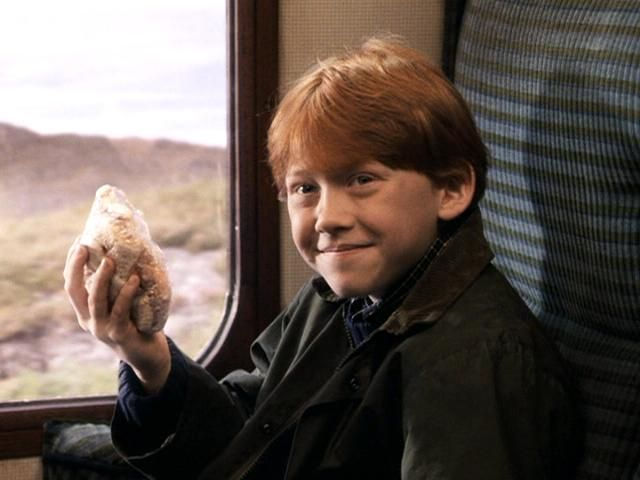
All of this is to say that food perfection is not a thing in my life at all anymore. I strongly believe this wasn’t a product of my cognitive reframing — but far more biological. My body knows baguettes aren’t scarce. This one isn’t sacred. It’s one of a million and one more to come. And thus, this 1-dimensional lunch eaten whilst bobbing through unsettled seas was immaterial to my body and mind.

Warmth and Sitting
Two other things from this excursion stand out.
First: the cold. Standing on the top deck in -20°C was, without doubt, the coldest I’ve ever been in my life. My eyelashes were frozen. My boot laces were like twigs and my fingers entirely stopped communicating with my brain.
Yet after going inside, it took just ten minutes for my body to feel warm again. During my eating disorder, I didn't just feel chilly. I felt cold to the bone. Or for that matter, burning like a furnace. My intolerance to the cold didn't just mean I felt uncomfortable. I felt emotionally vulnerable, irritable and shut down.
Since the thermoregulatory centre in the brain is highly linked to energy availability, the capability to maintain a stable internal temperature is something an undernourished system often lacks. I raise this point specifically because scientific and anecdotal evidence suggest that thermoregulation can only stabilise when somebody has been in energy balance for an extended duration. Thus, this is another call for full recovery — a state of secured maintenance without the constant fluctuation of lapses.
Second: the sitting.
As you have heard, this excursion involved roughly ten hours of sitting down, on my bum, with only a brief intermission. In the past, I genuinely don’t know how I would have approached this. Would I have got up early to go for a walk beforehand? Plotted to walk more on subsequent days? Or, maybe lingered in the corner trying to stand? I absolutely dread to think.
All I know is that the idea of sitting for ten hours would have soured my mood considerably. I would have been deep in ED negotiations instead of present for one of the most extraordinary days of my life — and I would have been terrible company for my sister.
Alike the supermarket situation, there was an ‘in recovery’ version of me who could have partaken in that day. But the difference would have been my comfort, my presence and my joy. To reiterate once more, an eating disorder is not only an affliction if it robs you of experiences entirely, but also if it removes the physical and mental contentment of the activities you do participate in.
No Opportunistic ED
What happened that evening is also relevant. Back at the Airbnb, my sister and I both experienced the peculiar sensation of Mal de Débarquement — land sickness. This is the feeling of continued rocking and swaying caused by the brain struggling to readjust to stable ground. As the sofa we were sitting atop felt as if it was a Lilo in the middle of the ocean, vague nausea begun to swell.
During my illness, my ED acted like a restriction scout. It relentlessly searched for a “valid-looking” reason to restrict. And, if any situation fit the criteria, this would have made the cut.
Now, I don’t have suspicion around whether food aversion is arising from somewhere sinister. I know firmly in my heart that it isn’t. But I still live by one rule: well-fed is always best.
And so, we cooked dinner anyway. Whilst still bobbing, whilst still swaying. No negotiations. No escape routes sought. No ED thought catching like wildfire and then becoming impossible to ignore.

Eating Early
The following evening, we had a Northern Lights excursion. The booking instructions read:
“Meet at 5.30pm. Wrap up warm. Eat a substantial dinner beforehand. Cookies and hot chocolate will be served on route.”
I imagine most of you agree that 4:30pm is not the optimal time to eat dinner. Alas, nor is 2am. And so dinner prior it was!
In the past, I am quite certain that my reluctance to eat dinner so early would have been somewhat linked to ED-OCD. I didn’t usually have dinner at 4.30pm so it didn’t feel like it ‘worked’ to eat dinner at 4.30pm.
But the deeper reason behind the reluctance was not just OCD rigidity, but rather my ED brain not knowing how to navigate the disruption to other meals that this would cause. If I was honest, it was less about not being hungry at that time, and more about fearing hunger later. If I ate a meal 'so early', what would I eat for lunch? What would I eat in the evening? What if this lead to eating 'too much'.
This type of rumination was a relentless occurance for me in the past. Be it a cinema showing, a fireworks night, a theatre production, or a pub meet-up with friends, every activity that jumbled my meal times seemed like a bothersome interruption that I would rather not do at all.

Now, of course, having been out of food scarcity for an extended duration, that biologically driven concern doesn’t arise. My body knows it’s safe. My body knows it will be well nourished. My body has evidence and experience of me not stopping short of a perceived 'too much'.
And just to demonstrate why it trusts me so deeply, — it is because I continue to action unconditional permission. At around 8.30pm that evening, I had a '2nd dinner', one I had packed just in case. Subsequent to that, I ate the cookies. I had the hot chocolate. And I also had a bowl of cereal gone midnight before I went to bed.
The Sami Village

Our final excursion was a visit to a Sámi village — the home of the indigenous Sámi people. As well as a talk on the culture and meeting reindeer, the itinerary involved lunch: an unspecified soup, served at an unknown time, served in an unclassified setting, surrounded by fifty or so strangers. As we boarded the bus that would take us to the village, all we were asked was for our booking QR code and whether or not we were vegetarian.
In the past, the uncertainty of all of this would have consumed my mind for the entirety of the morning. Though I’d have been physically present through the experience, I know I’d have been mentally drifting.
Once again, I try to think of how I would have navigated this excursion in the past. And honestly, I really don’t know. Would I have brought my own food? Emailed in advance to ascertain details? Or skipped the outing entirely? I'm not quite sure.
At best, I would have forced myself through the outing — and paid for it with immense ED backlash inside.

Conclusion
As you may agree, none of these moments of food permission that I’ve described are particularly dramatic. I’ve talked about supermarkets, packed lunches, sitting down, and eating dinner early.
But what is so significant about these occasions is how the presence of an eating disorder would have made them immeasurably more complicated.
What I really want to convey is that part of recovery is indeed about going out for the triple cheese pizza followed by ice cream sundaes that arrive with fireworks and applause from family. But perhaps the larger part is the quiet, unobserved permission you practise and build at home, unaccompanied, on a rainy Friday afternoon when there is open opportunity not to. It is this work that, when done consistently, truly rewires the brain, and allows flexibility and spontaneity to be the default in all life situations. And it is this peace that you deserve no less than.

What you take from this blog may depend on where you are in recovery.
If you’re at the start: please know that life truly can get so much better. Sincere unmitigated freedom is available for you to take, on the other side of your fear.
If you’re in the middle: hear me when I say that a performative recovery isn’t what releases you. Consistency of regularity, adequacy and variety is. Ostentatious actions that make you look like The Best Recovered Person Ever are not what will get you feeling free.
If you’re nearing the end: I want you to know that the freedom you’ve found thus far isn’t the ceiling. The percentage of freedom that you’ve already felt will feel two-fold when the ED is silenced, not merely muffled.
As promised, here are the three takeaway questions.
What position are you in to navigate a holiday like this?
1. I couldn’t.
2. I could — but only because it’s a holiday, a temporary suspension of rules.
3. I could — but with significant ED interference, compromising my experience and relationships.
With that answer in mind, are your current recovery efforts moving you towards genuine, fully rewired freedom, or are they keeping you treading- water and micro-managing your life participation?
What tax is your eating disorder making you pay beyond enjoyment of food? Even if food freedom doesn't entice you to push further, what life freedom do you want?
The ability to look forward to things?
Uncompromised memories?
Warmth?
Spontaneity?
Connection?
Preference?
Rest?
Laughter?
Mental space beyond fear, body and food?

To close, I want to share a reflection that was so meaningful to me that it brought tears to my eyes on the plane.
When I think back to this trip, I of course think of the northern lights, the spectacular scenery and the fuzzy reindeer snouts on my hands. I am exceptionally lucky to have had even just one of those experiences in my life, let alone several within one week.
But do you know what I remember equally as much, if not more? The time I had with my sister. Specifically, the energy my body now has to waste on frivolous full belly laughter with her. Several years passed in which I do not recall having that connection at all, or the specific stomach pain that only comes from unbridled laughter. On this trip 4-day trip, that experience was multiple times per day.
A well-nourished life means there is energy going spare. And the seismic difference that this spare makes to your everyday is more than you could ever believe.
Instead of rolling my eyes when my sister said my gilet made me look like I was hosting a board meeting in Canary Wharf, I giggled so hard I almost peed.
Instead of sulking when her groan at an iPhone Aurora alert awoke me at 4am, I leapt to the window whilst chuckling at the absurdity of it all.
And instead of becoming irritable at the oddly positioned bookcase above my bed that my forehead kept meeting, I laughed and laughed and laughed.
We laughed. Together.
And that is only a by-product living within a deeply nourishment state.
I implore you with all of my heart: please do not let your eating disorder convince you that just because you can 'do the things', this is as good as it gets.
It is your inner experience of all of those things that matters.
How you feel living through your life is far more important than how your life externally looks.
Alignment requires genuine authenticity, and that cannot be fully embodied in the presence of an illness that consistently encourages turning away from oneself.


Comments